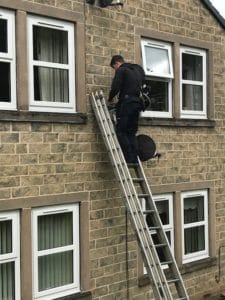
A weak TV aerial signal can turn your comfortable evening of watching Freeview into a frustrating experience of flickering screens, pixelated images, and missing channels. Many households deal with signal problems without knowing what causes them or how to fix them, and the issue often appears suddenly after bad weather, moving furniture, or even changing the layout of cables behind the TV.
Improving a TV aerial signal isn’t always complicated, and in many cases you can fix the problem yourself with a few careful checks. This guide explains exactly how to boost a TV aerial signal, why issues happen, what you can do at home, and when you should call a professional to diagnose the root cause.
Why TV Aerial Signals Become Weak
Before boosting the signal, it helps to understand why the problem happens. Freeview relies on a clean, stable transmission from your rooftop aerial to your television. Anything that disrupts that chain can weaken the picture.
- Weather and Wind Exposure
Strong winds, storms, and heavy rain can knock aerials slightly off alignment. Even tiny movements can affect reception, especially if you live in an area with marginal signal strength.
- Damaged Cables or Connectors
Coaxial cables degrade over time. Water ingress, rusted connectors, loose plugs, or crushed sections can cause immediate drops in signal quality.
- Interference from Nearby Electronics
Power cables, Wi-Fi routers, LED lights, extension leads, amplifiers, and even cheap phone chargers create electrical noise. When your aerial cable runs too close to these devices, interference becomes noticeable.
- Long Cable Runs
The longer the aerial cable, the more the signal weakens before it reaches your TV. Large homes or multi-room setups suffer from this the most.
- Incorrect Aerial Position
Even a high-quality aerial won’t perform well if it’s pointing at the wrong transmitter or obstructed by buildings, trees, chimneys, or surrounding terrain.
- Old or Low-Quality Aerials
Budget aerials often struggle in weak-signal locations. Older models degrade, especially if they’ve been exposed to years of weather.
- Distribution Issues
In homes with multiple TVs, splitters weaken signals across all rooms. Without an amplifier, each added connection reduces overall strength.
Knowing the cause helps you choose the right method to boost your TV aerial signal.
How to Boost TV Aerial Signal: Practical Steps That Work
- Check All Aerial Cable Connections
Loose cables are the most common cause of weak TV signals.
Go through each connection and ensure it’s:
- Fully inserted
- Tight and secure
- Free from rust
- Not bent or corroded
Check both ends:
- The end that goes into your television
- The end that connects to the wall plate, set-top box, or amplifier
Even a small movement in the connector can cause pixelation or signal dropouts.
- Replace Old or Cheap Coaxial Cable
Low-quality aerial cables degrade quickly and provide poor shielding. This makes them vulnerable to interference and weather damage.
Upgrade to:
- WF100
- CT100
- RG6 (high quality)
These cables have superior shielding and deliver stronger, cleaner signals.
Signs your cable needs replacing:
- Stiff or cracked outer layer
- Rust around connectors
- Loose plugs
- Discolouration
- Visible splitting
Replacing the cable alone often restores full signal strength.
- Shorten the Cable Run if Possible
Long coaxial cables weaken the aerial signal. If your TV uses an unnecessarily long extension, reducing the length will immediately improve strength.
Try to:
- Remove any unnecessary extra coil of cable
- Use the shortest route from the aerial to the TV
- Avoid loops, tight bends, or crushed sections
If you recently extended your aerial cable, the added length may be causing the weakened signal.
- Use a High-Quality Signal Booster (Amplifier)
A TV aerial booster increases the strength of the signal travelling down the cable. It is most useful when:
- You live far from the nearest transmitter
- Your home has several TVs connected to one aerial
- You have long cable runs
- Your reception is weak even before splitting systems
Important note: A booster cannot fix a broken aerial or damaged cable. It only amplifies the signal already being received.
Boosters work best when installed:
- As close to the aerial as possible
- Before any splitters
- Or inside the loft for indoor aerial systems
Avoid cheap plug-in boosters from supermarkets—they often cause more interference than improvement.
- Install a Masthead Amplifier
A masthead amplifier sits close to the aerial itself—usually on the mast or in the loft. It boosts the signal at the exact point of entry, giving the cleanest amplification possible.
You should consider one if:
- You live in a poor reception area
- You have a long distance between the aerial and TVs
- Your signal weakens after bad weather
- Distribution in a large home causes multiple TVs to lose channels
This type of amplifier is significantly more effective than indoor models and is widely used in rural and semi-rural areas.
- Remove Unnecessary Splitters
Splitters reduce the power of your signal by dividing it between multiple TVs.
If you have unused outputs, remove the splitter completely.
This alone can restore stability to your main TV.
Alternatively:
- Replace passive splitters with powered distribution amplifiers
- Cap unused outputs with 75-ohm terminators
- Ensure all ports are used correctly
These steps prevent unnecessary signal loss throughout your system.
- Reposition the Aerial for Better Reception
Your aerial’s alignment has the biggest impact on reception.
Common issues include:
- Aerial pointing at the wrong transmitter
- Aerial blocked by buildings, hills, or tall trees
- Aerial mounted too low
- Damage from storms causing misalignment
If your aerial has moved or twisted even slightly, your Freeview signal suffers instantly.
Repositioning involves:
- Rotating the aerial to match the transmitter direction
- Adjusting elevation
- Ensuring the aerial is raised higher
- Clearing obstructions where possible
Even a few degrees of adjustment can significantly boost your signal.
- Upgrade to a High-Gain Aerial
High-gain aerials are designed for weak-signal areas. They capture more signal due to their larger structure and precision build.
You may need one if:
- You live in a rural area
- Reception has always been poor
- Neighbours complain of the same issue
- Your home is low-lying or surrounded by hills
- Trees block your line of sight
Upgrading from a basic contract aerial to a high-gain model often transforms picture quality overnight.
- Remove Indoor Interference
Household electronics can weaken signal strength. Keep your aerial cable away from:
- Power leads
- Wi-Fi routers
- LED light strips
- Phone chargers
- Games consoles
- Extension leads
- Microwave ovens
- Bluetooth speakers
Aerial cable should be:
- Routed separately
- Not touching power cables
- Away from metal furniture
- Not coiled tightly
Moving the cable just a few centimetres away from interference can improve the picture immediately.
- Retune Your TV Correctly
Poor signal after retuning is common when:
- Your TV locks onto the wrong transmitter
- Weather conditions cause temporary interference
- Channels rearrange or update
Try a full retune:
- Remove aerial cable and scan → clears old data
- Reconnect aerial and scan again → fresh channel list
This ensures your TV locks onto the strongest local transmitter.
- Check Wall Plates and Splitters for Damage
Wall plates and connectors inside the home often corrode without anyone noticing.
Look for:
- Loose screws
- Rust
- Discolouration
- Bent pins
- Water damage
- Dust buildup
Replacing an old wall plate costs little and can dramatically improve signal quality.
- Check for Water Ingress
Water getting into the coaxial cable drastically weakens the signal. It often happens when:
- Aerials are poorly installed
- Rubber boots have deteriorated
- Connectors have cracked
- Cables have split due to frost
- Clips have pierced the outer insulation
Signs include:
- Brown water stains
- Crackling sound when moving the cable
- Sudden channel loss
- Heavily pixelated images
Water damage means the cable must be replaced—boosters won’t fix it.
When a Weak Signal Cannot Be Fixed at Home
Some problems require professional equipment to diagnose and repair.
You should call an engineer if:
- You’ve tried all the above and channels are still missing
- Pixelation continues even after tightening connectors
- Your aerial is visibly damaged or leaning
- Strong wind has shifted the installation
- Your cables show signs of water ingress
- You live in a known weak-signal area
- Trees or buildings are blocking the line of sight
- Your aerial is more than 10–15 years old
- You rely on a communal system in flats or apartments
Professionals use:
- Spectrum analysers
- Digital signal meters
- High-gain test aerials
- Pro-grade coaxial cables
This allows precise diagnosis and long-lasting improvements.
Signs You Need a New Aerial Instead of a Signal Boost
Boosting the signal won’t help if the aerial itself has deteriorated.
Consider replacing your aerial if:
- The picture is still unstable after boosting
- Your aerial is old, rusted, or bent
- Birds have damaged it
- Wind has caused movement over time
- Your neighbours have upgraded theirs recently
- Your home’s location has always suffered from poor reception
- You experience frequent dropouts after rain
A new high-quality aerial provides:
- Better noise rejection
- Improved gain
- Stronger connection to the transmitter
- Reduced risk of future interference
It’s a long-term investment that keeps your Freeview reception stable for years.
Final Thoughts
Boosting your TV aerial signal is often straightforward once you understand the likely cause of the problem. Simple checks like tightening connectors, replacing damaged coaxial cable, or removing splitters can instantly restore a stable Freeview picture. For homes with poor reception, adding amplifiers or realigning the aerial can make a dramatic difference.
However, some issues—such as water damage, severe misalignment, or outdated aerials—require professional help. A properly installed, correctly aligned, high-quality aerial remains the best long-term solution for strong, reliable signal across all your TVs.
If you need help fixing reception problems, boosting your aerial signal, or upgrading to a newer system, The Aerial Guys are always ready to assist with expert support and friendly advice.